

Santoku knife: what is it for? Discover the famous Japanese knife


In Japan, blades are much more than mere utensils or cutting weapons. The civilization of the rising sun is millennia-old, and throughout its history, the traditional forging of knives and swords has maintained a strong presence, becoming an indivisible part of Japanese aesthetics and culture.
The Santoku knife is the result of much tradition and quality: its characteristic design and its more-than-versatile functionality make it such a popular item that today it is one of the classics of cuisine worldwide.
Curious? Come with us to learn a little about the tradition of Japanese cutlery, the origins, and characteristics of the versatile and beloved Santoku. As a bonus, we'll help you differentiate a Santoku from a Western knife!
Japanese knife tradition: a millennial history
It's impossible to talk about the utility of Santoku knives without addressing the history of the iconic katana. A sword characteristic of samurais, known for its elegance, simplicity, and incredible lethality. Razor-sharp, katanas were very agile and cutting war swords, designed for victory in battle.
For an 8th-century samurai, his sword was more than a weapon. It constituted an extension of his body, mind, and soul, accompanying him at all times of his journey.
Therefore, over the centuries, the Katana was given a sacred aura, and the sword began to be crafted and esteemed as a family heirloom, a symbol of power and honor.
In 1876, the carrying of bladed and firearms by non-officials was completely prohibited. After the decree, samurais lost their profession and began to be persecuted, while the forging of katanas was abruptly interrupted.
Santoku Knife: the three virtues of versatility!
Born in the same cradle as the powerful samurai swords, Santoku knives share the rigor and quality characteristic of Japanese cutlery. A knife created to be a precise cutting machine! Its personality, however, may be more Western than you imagine.
The history of the Santoku has everything to do with the tragic end of katanas. After all, when the Meiji government prohibited the manufacture of bladed weapons, an important wave of experienced blacksmiths began to apply their skills to kitchen equipment and cutting tools — areas where they employed all their excellence.
This entire process made Japan a country highly recognized for its cutlery to this day.
What is the Santoku knife used for?
The Santoku knife was born at the end of World War II when cuisines from other countries began to influence traditional Japanese cooking. In this context, it was designed for versatility: a universal knife was desired, one that would perform all procedures in food preparation with excellence.
Even its name refers to multifunctionality: Santoku, in Japanese, means “three virtues”. About the nature of these three virtues, however, there is still debate. Some say they refer to the knife's three most common uses: chopping, slicing, and dicing.
Another interpretation understands that the name refers to the cutting of the three main food groups: meat, fish, and vegetables. Either way, it is a knife that performs all these activities with ease and enviable performance.
Main characteristics of the Santoku knife
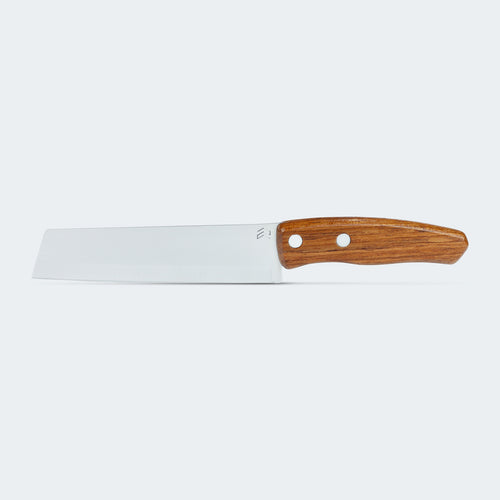
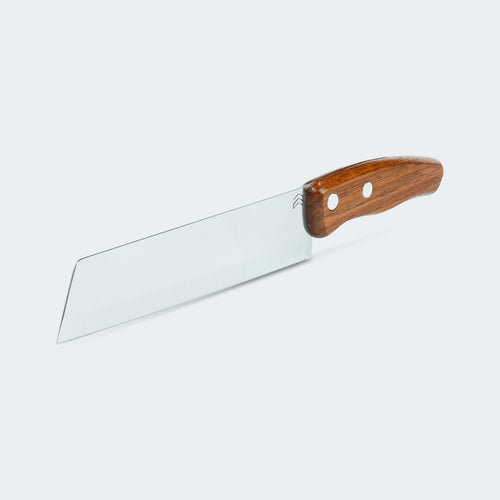
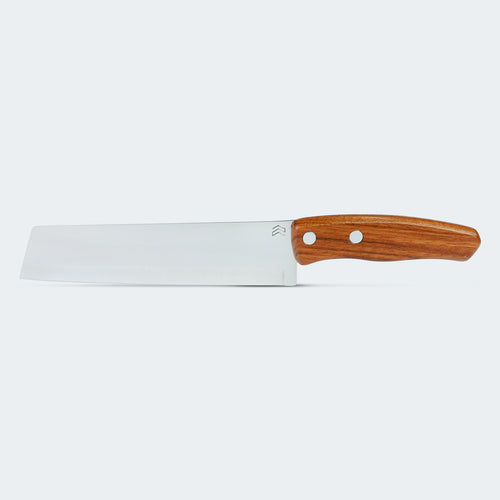
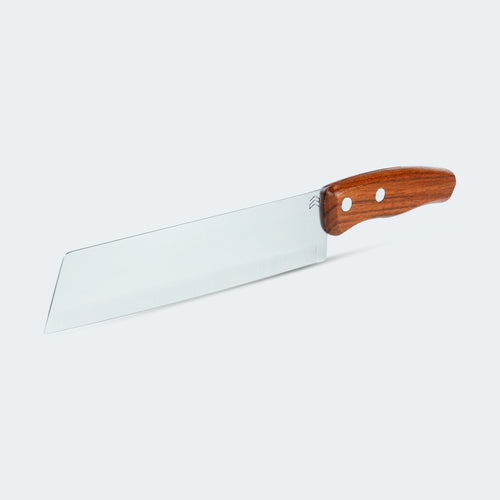
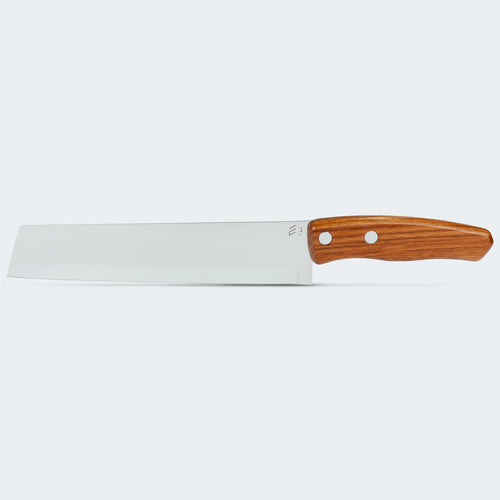
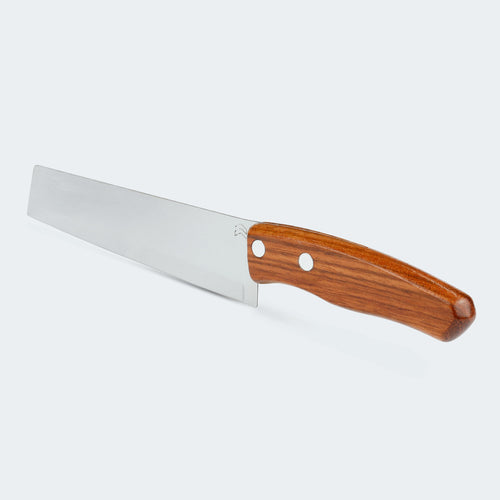
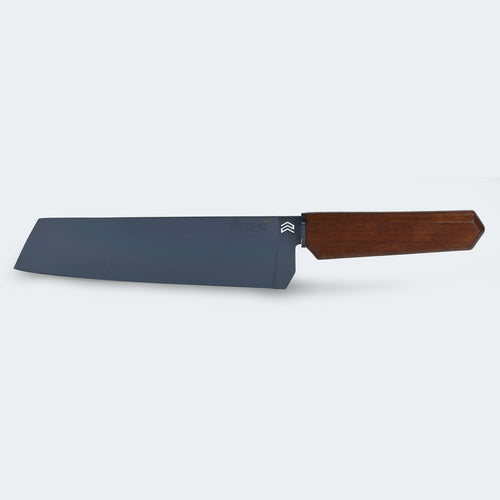
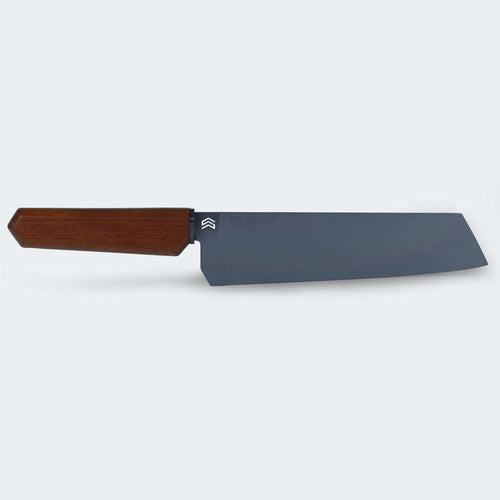
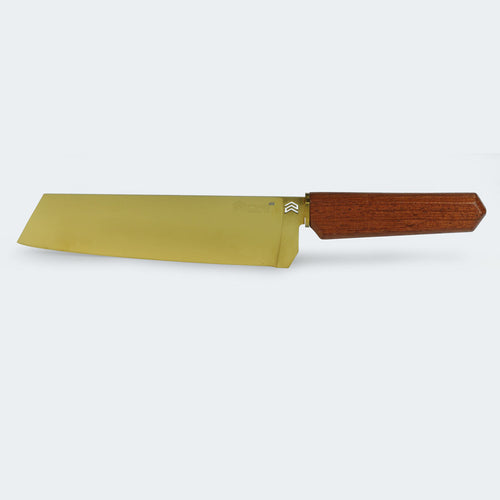
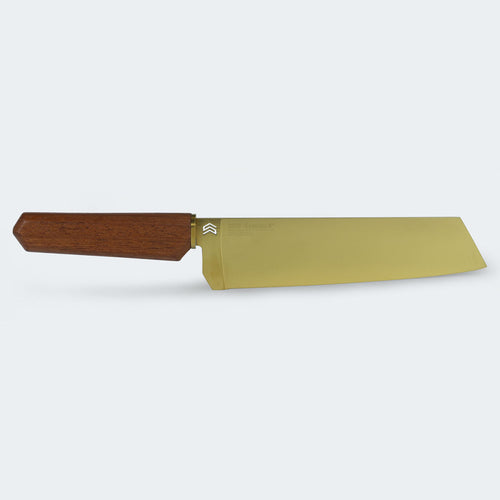
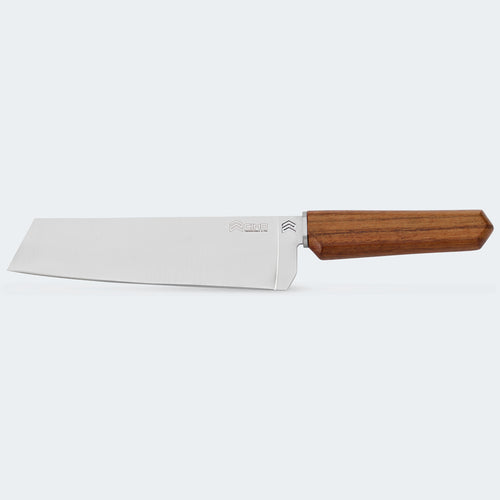
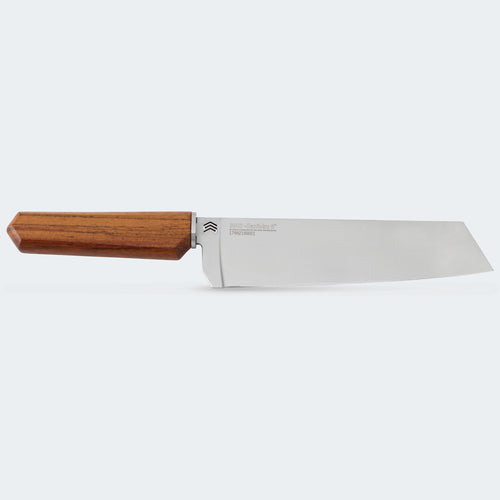
As a rule, the Santoku knife has a blade with a higher profile than Western knives, with a thinner thickness and slightly shorter length. It is prepared for clean, stable, and precise cuts, on hard or soft foods.
Its most characteristic aspect is the tip that turns sharply downwards, in a shape similar to the tip of a katana. Beautiful, powerful, and versatile — everything a chef could want.
But now, how do you identify a Santoku and the traditional chef's knife?

Santoku vs Western knives: how to differentiate?
It is no exaggeration to say that the Santoku is the oriental version of the chef's knife, a great classic of Western cuisine, the famous "do-it-all" knife. Both are excellent for all types of preparation, very versatile, and precise.
In general, the chef's knife differs by its longer blade and slightly lower and thicker profile. It has the famous clip point, a sharp and pointed tip well centralized on the blade body. It appears in various types of grinds, to the user's preference. It can also be called a barbecue knife, an adaptation very conditioned by the shape of its handle.
Due to its smaller dimensions and less pronounced and inquisitive tip, the Santoku is classified as less intimidating than the chef's knife — but it is no less powerful.
When investing in one, expect a comfortable and highly efficient user experience.
When to use the Santoku knife and the chef's knife?
Thanks to its thinner and sharper blade, the Japanese Santoku knife can be considered more precise and tends to perform better on soft meats, delicate slicing, and fish cleaning.
On the other hand, the chef's knife is usually more resistant to dry and hard cuts, due to its thicker blade. In any case, it is worth investing in both and building a complete collection, super versatile and adaptable for countless preparations.
So, did you like today's post? Enjoy the functionality of this incredible piece now that you know what the Santoku knife is for!
To not miss any news about the world of cutlery, stay tuned to our blog. We have updates every week! Complement today's reading by checking out our post that shows 10 different types of knives to know and use!
Aproveite e compre junto
Postagens recentes

 17 de June de 2026
Slip Joint Lock: tradição e simplicidade em uso | CIMO
O slip joint lock é um dos mecanismos mais tradicionais da cutelaria, valorizado...

 04 de June de 2026
Cutelaria CIMO participa da IWA OutdoorClassics 2026
CIMO reforçou presença internacional na IWA OutdoorClassics 2026, na Alemanha A Cutelaria CIMO...

 27 de May de 2026
What is cutlery? Get to know the creation of blades!
Did you know that cutlery is one of humanity's oldest ancient techniques? The...