

How to sharpen your knife? Practical tips and suggestions!


For those who work in the kitchen, having a good set of knives is simply fundamental for good performance. To achieve this, it's essential to know very well how to sharpen a knife whenever necessary.
But good dishes aren't only made by chefs, right? If you're a kitchen tourist and occasionally love to venture into cooking, you already know that a dull knife will steal your time and, most likely, your patience.
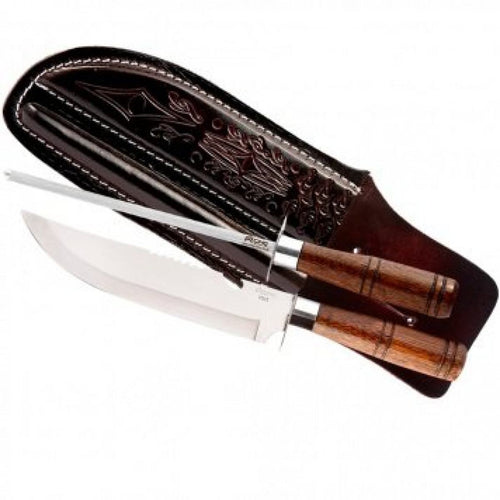
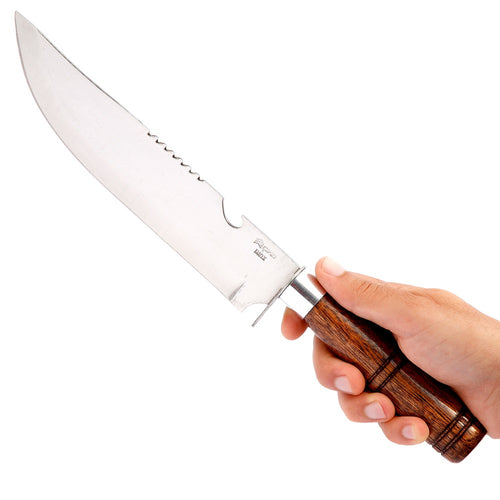
Thinking about the good old sharp way of living that CIMO understands so well, we concluded that a knife is often much more than a common kitchen utensil. A barbecue knife, for example, can be the center of attention.
In many cases, they also function as decorative items or are considered a true relic that only comes out of the box on super special occasions. Along with pocket knives and machetes, they can also be collected and are excellent gift options.
However, whatever their specific function in the kitchen, it's very important that your knives are always very well sharpened. Therefore, check out our tips to keep this utensil always in good sharpness.
Sharpening your knife in a conventional way
First of all, we need to remember that each type of use requires a different style of knife and that, therefore, it's quite common for each professional to have their particular way of sharpening the knife model they choose.
However, even with all the differences, there are some techniques that are very conventional and can be used in the vast majority of cases. Learn more about some of them:
Honing steel: classic and efficient
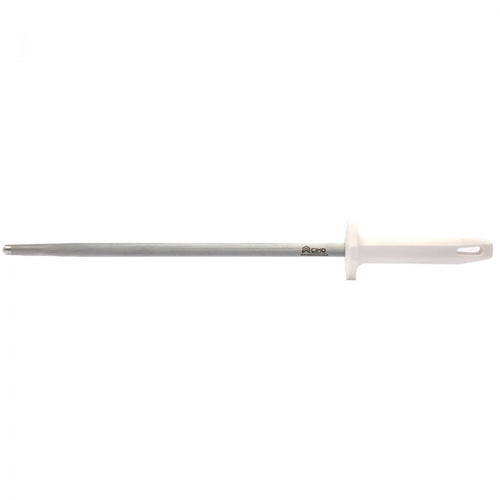
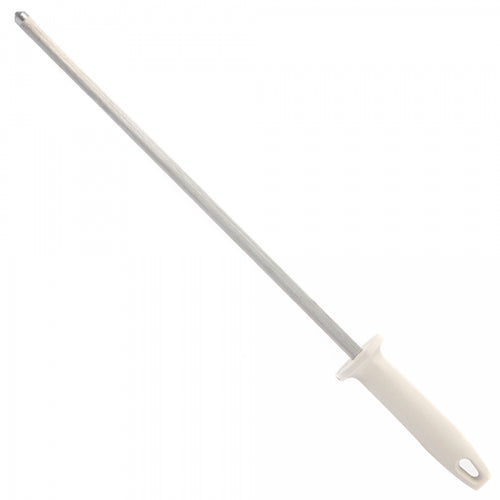
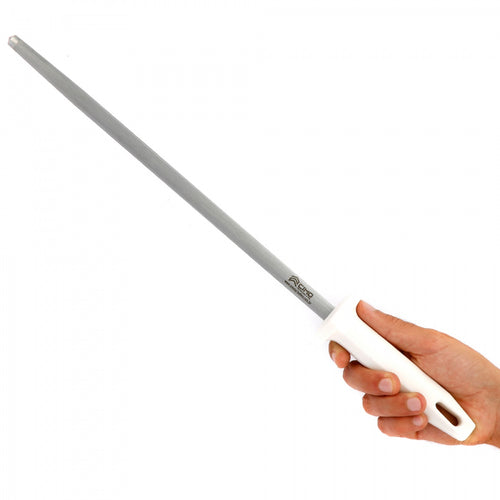
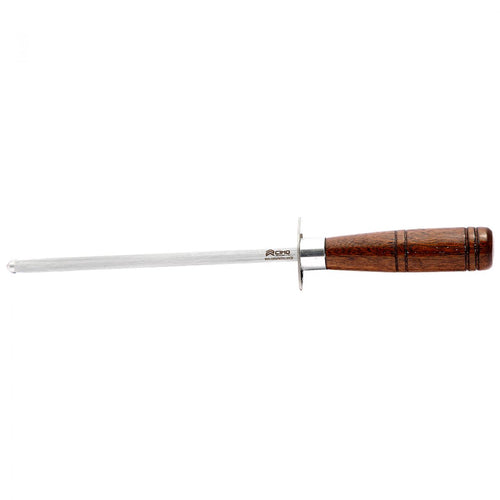
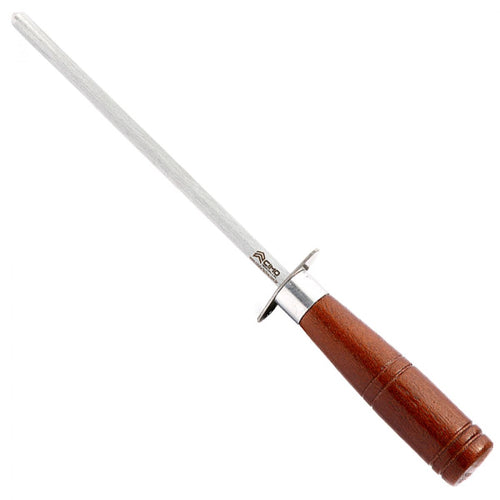
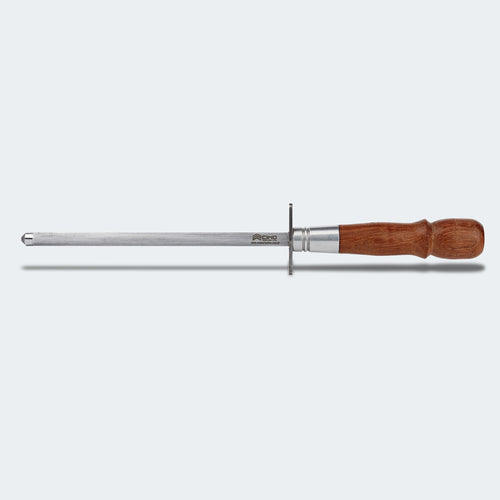
 Because they are widely used in both domestic and professional environments, honing steels have gained the position of an indispensable utensil. What it does is straighten the blade, so it's important to use it whenever you feel the need.
To sharpen your knife with a honing steel, just keep it in a fixed position, at an angle of approximately 15 degrees. Once done, it's time to slide the knife along the honing steel, starting from the tip to the base.
To perform this process efficiently, patience is required. Achieving a good result will demand some practice. Watch our video to understand how the process works in practice and also learn how to test your knife's edge after sharpening:
Sharpening stone: learn how to sharpen
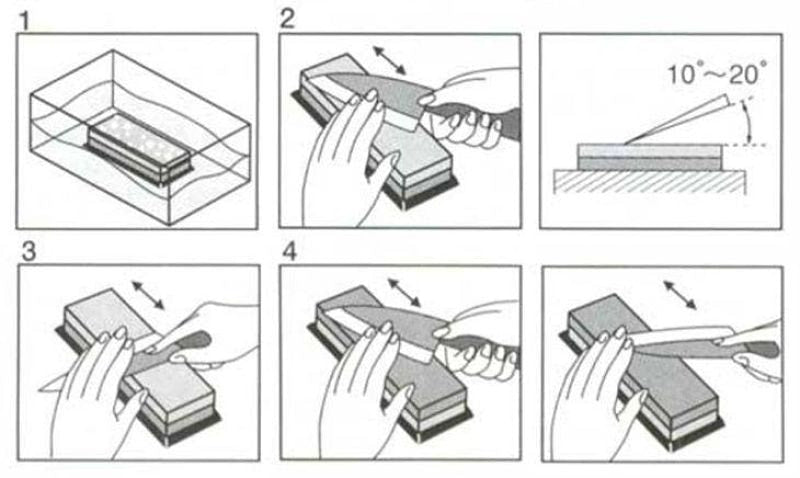
To sharpen your knife using a sharpening stone, remember to soak it in water for a few minutes. The stone needs to be wet for the necessary results to be achieved.
After soaking it, place it on a secure surface. The side of the stone to be used will vary depending on the condition of your knife. If they are sharpened frequently, they can usually be worked with using only the finer side.
However, in any case, the process is quite similar. Simply position the knife on the stone at an appropriate sharpening angle, about 30º. Once done, use both hands to hold the knife, one hand holding the handle and the other the opposite end.
Now you just need to pass the blade along the entire length of the stone, in repetitive movements until a burr is created. Repeat the process on both sides, also several times.
The appropriate use of a grinder
A grinder is basically a "grinding wheel" spun by a motor. Because it is a more complex piece of equipment, it requires greater attention from the user. Some experience is even recommended before operating the equipment alone.
To sharpen your knife using the grinder correctly, first apply lubricating oil to the machine's blade; this will prevent errors that could damage the knife blade while it is being sharpened, especially for novice users.
Turn on the grinder and position the knife at a sharpening angle, approximately 45º. Pass the knife in continuous movements, from tip to base. Remember to perform this procedure on both sides.
Sharpening your knife in unconventional ways
There are various homemade methods for sharpening knives. Some people use the edge of the sink, others even use rough walls. However, these methods usually damage the knife, scratching or bending the blade.
Furthermore, they are usually not very efficient. Therefore, if you don't have access to any of the conventional sharpening methods, it's time to find a less harmful alternative that preserves the knife blade.
Sharpening your knife on a ceramic mug
This is a method that became viral on the web for being accessible and less damaging to the blade. However, it's worth remembering that it is by no means the most recommended, but it can be useful if there is no other option.
All you need is a ceramic mug. Just place it face down and run the knife, from tip to base, along the rough circle that ceramic mugs usually have.
Your knife will probably be sharp in a few minutes. Remember, however, that what matters is not the force applied in the process, but the skill and practice with which the operation is performed. Not damaging the blade is still a priority.
So, did you like the post? We hope it was useful in helping you keep your knives always sharp.
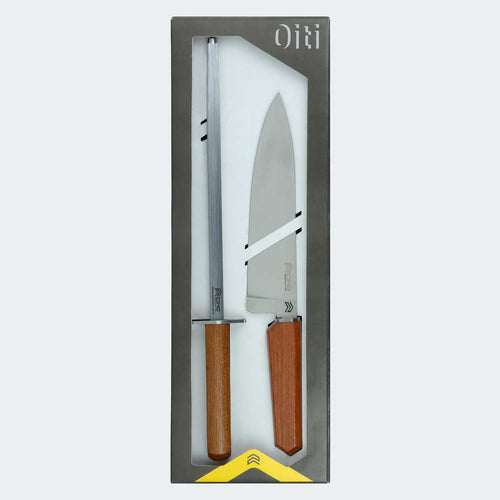
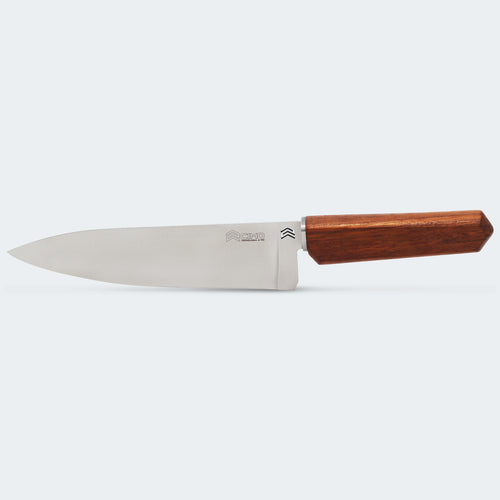
Come visit the Cutelaria CIMO online store and get ready for your challenge with a brand new knife set! Check it out!
Aproveite e compre junto
Postagens recentes

 17 de June de 2026
Slip Joint Lock: tradição e simplicidade em uso | CIMO
O slip joint lock é um dos mecanismos mais tradicionais da cutelaria, valorizado...

 04 de June de 2026
Cutelaria CIMO participa da IWA OutdoorClassics 2026
CIMO reforçou presença internacional na IWA OutdoorClassics 2026, na Alemanha A Cutelaria CIMO...

 27 de May de 2026
What is cutlery? Get to know the creation of blades!
Did you know that cutlery is one of humanity's oldest ancient techniques? The...