

How to sharpen a knife on a whetstone? Check out this technique!


If you have a habit of cooking, whether professionally, in your daily home routine, or just for leisure, you certainly know that knives are essential — especially when they are well-sharpened!
A dull knife can hinder your performance in the kitchen, as it won't be able to cut anything, making it necessary to optimize it.
A very traditional method is to use a sharpening stone for this. But how do you sharpen a knife on a stone? Don't worry, we've gathered the best tips to help you understand the method and safely apply it at home. Check it out!
How to sharpen a knife on a stone? Complete step-by-step guide
Knowing how to sharpen a knife on a stone is a simple process and doesn't require many items. The most important thing to emphasize is the technique and movement used to sharpen the knife correctly.
Check out all the steps that must be taken to sharpen your knife on a stone and use the utensil stress-free, optimizing your time in the kitchen and preparing food.
Also check out: Do you know the parts of a knife? Cutelaria CIMO teaches you!
1. Place the stone in water
To begin the process of sharpening a knife on a stone, first, you must soak the stone in a container with water for approximately 25 minutes.
Soaking the stone in water is recommended to reduce friction between the stone and the knife, providing better gliding and a smoother, safer sharpening experience.
2. Organize the area where you will sharpen the knife
In addition to knowing how to sharpen a knife on a stone, it is also very important that the space used for sharpening is organized.
The process can be done on a countertop or in the kitchen sink itself, but it is necessary that the items are neatly arranged.
In addition to being organized, it is also necessary that the space where the knife will be sharpened has nothing that could somehow impede the movements to be made while the process is taking place.
This means not choosing narrow and cramped spaces or places where many people pass through at the same time.

3. Secure the stone in the prepared space
After soaking the stone and preparing the space to continue the process, it's time to secure the stone in the chosen location.
It must be well positioned on the sink or countertop. It's worth remembering that, at this stage, two options are valid:
-
Dampen a dishcloth and place the stone, removed from the water, on top, applying light pressure so it stays firm on the surface;
-
Use a specific holder for sharpening stones, which are used on the edge of countertops or sinks where knives are sharpened.
Remember, the most important thing here is to keep the stone as firm as possible on the surface where the knife will be sharpened, preventing it from slipping while the sharpening movements are performed. Once the stone is stable, then you can begin the process.
Be sure to check out: What are the best types of steel for cutlery?

4. Sharpen the knife on the stone
With the knife properly positioned, it's time to start sharpening it. Position yourself next to the sharpening stone for more comfort, hold the knife by the handle, and place your finger on its tip.
Slide the knife on the sharpening stone, always from the tip of the knife towards the handle. Apply light pressure during these movements for proper sharpening.
This movement should be done six times on each side of the knife. If you get a good result the first time you make these movements, the procedure can be ended; otherwise, continue.
Perform the maneuvers with precision, and before starting, ensure that the knife used for sharpening is well-positioned, which will bring greater safety and a better result when sharpening it.
Honing or sharpening: what's the difference?
Both terms are widely used when referring to knife kit maintenance, but it's worth remembering that they are different and each refers to a distinct action.
-
Honing knives means that the cutting edge will be corrected. This way, they will return to the correct position, reducing bends, in the case of serrated knives, or possible undulations in the blades of smooth knives;
-
Sharpening means making the knife capable of cutting again, which is related to the steps you are learning here.
It's worth remembering that, to maintain the cutting quality of your knives for much longer, it is recommended that the sharpening process be performed periodically.
5. Finish with a honing steel
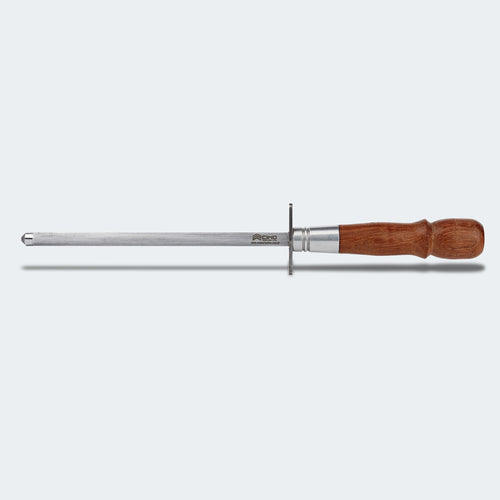
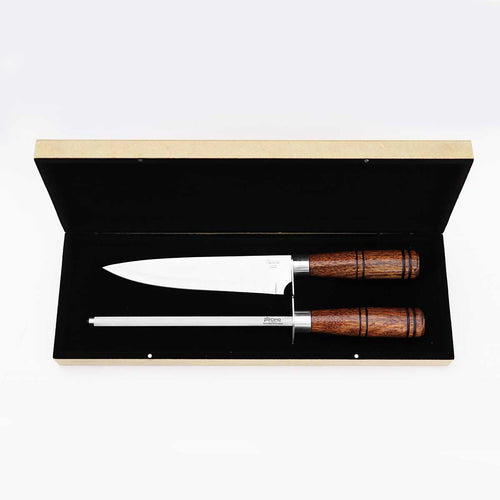
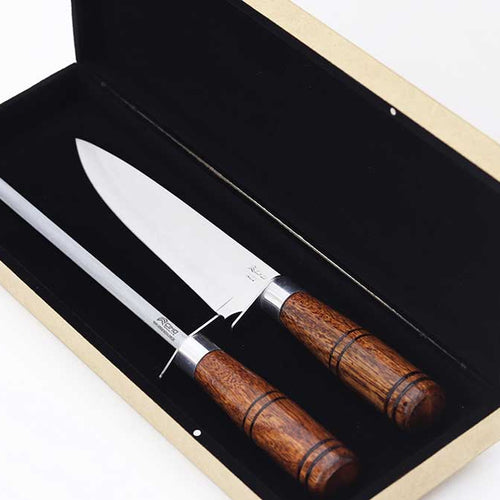
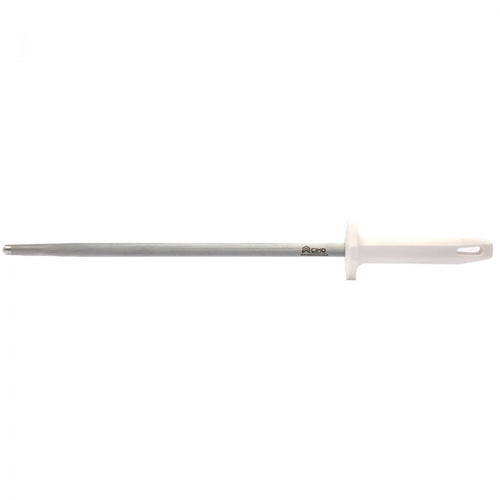
Finishing with a honing steel is optional, but it's recommended that you have this tool at home to complete the knife sharpening process thoroughly.
The honing steel should be positioned vertically, and the knife, in turn, should be drawn across it from side to side downwards, towards the handle. It's important to note that the honing steel serves to align the knife's edge right after it's been on the sharpening stone.
At the end of the process, you should carefully clean the knife blade, using a damp cloth to remove any possible residue from the knife. Once done, it will be ready to use in your kitchen and help you prepare food.
The step-by-step guide on how to sharpen knives is quite simple, and surely, by following it correctly, your knife will be sharp again in minutes. Therefore, rely on these tips to always have your knives ready to assist you in the kitchen.

Which side of the stone to use to sharpen the knife?
It's important to know that every stone used for sharpening knives has two sides: one rougher and one smoother. If the knife in question is sharpened frequently, the smoother side can be used. However, if it's not sharpened constantly, the rougher side should be used.
Additionally, it's worth remembering that sharpening any knife should always start with the rougher side, and as it gets sharper, the smoother side can be used.
Knife care
Keeping knives sharp is essential to optimize time in the kitchen and always have utensils at hand to use. However, it's worth remembering that some care is necessary, especially after the knives have been sharpened.
-
Wash the knife after sharpening to remove any stone residue to prevent food contamination;
-
Store knives in a dedicated drawer or, if you prefer, you can also store them with their blades facing down. It's also possible to buy a knife block and place all of them in it, offering greater practicality in the kitchen;
-
Always hold knives by their handle and never by the blade, reducing the chance of accidents;
-
Have more than one kitchen knife to reduce the frequency of sharpening, if necessary. Also, perform maintenance on your knives periodically.

Now that you know how to sharpen a knife on a stone, follow all the steps safely and keep your utensils always sharp.
This way, you can optimize your time in the kitchen while preparing food. Also, find out more information about how to sharpen a knife in our other post.
Until next time!
Aproveite e compre junto
Postagens recentes

 17 de June de 2026
Slip Joint Lock: tradição e simplicidade em uso | CIMO
O slip joint lock é um dos mecanismos mais tradicionais da cutelaria, valorizado...

 04 de June de 2026
Cutelaria CIMO participa da IWA OutdoorClassics 2026
CIMO reforçou presença internacional na IWA OutdoorClassics 2026, na Alemanha A Cutelaria CIMO...

 27 de May de 2026
What is cutlery? Get to know the creation of blades!
Did you know that cutlery is one of humanity's oldest ancient techniques? The...